Factory Relocation Checklist: How to Plan an Industrial Move
A step-by-step checklist for moving a factory in South Africa: from the first plan and machine survey to rigging, transport and getting production running again.
Published 16 September 2026 · 10 min read
In This Article
- 1. Define the scope and the downtime you can accept
- 2. Survey and document every machine
- 3. Prepare the new site
- 4. Safety, compliance and permits
- 5. Build the move schedule
- 6. Move day: disconnect, rig, transport
- 7. Install, level and recommission
- 8. Common factory relocation mistakes
- 9. Frequently asked questions
Why factory relocations go wrong
Moving a factory isn’t just moving heavy things from one building to another. It’s a project that combines engineering, electrical work, lifting, heavy transport, compliance and production planning, often with several contractors involved and a hard deadline for getting production back online.
When relocations go over time or budget, it’s rarely the move itself that failed. It’s usually something upstream: a floor that wasn’t ready, a machine that was heavier than the paperwork said, a permit applied for too late, or two contractors who each assumed the other was handling a task. The checklist below is designed to catch those problems early.
Stage 1: Define the scope and the downtime you can accept
Before calling anyone, get clear on what’s moving and what the business can tolerate.
- List everything that’s moving: production machines, supporting plant (compressors, chillers, extraction, cranes and hoists), racking, tooling, and stock
- Decide what’s not moving: old equipment to sell, scrap or replace. A relocation is the cheapest time to get rid of it.
- Set a downtime limit for each production line. This decides whether you move everything at once or in phases.
- Talk to customers and suppliers early, and plan stock builds to cover the move period
- Appoint one internal project owner with the authority to make decisions quickly
- Check your lease, insurance and landlord obligations for both the old and new premises, including reinstatement requirements at the old site
Stage 2: Survey and document every machine
Accurate machine data drives every later decision: which crane, which trailer, whether a permit is needed, and how the new floor must be prepared. For each machine, record:
- Weight, from the manufacturer’s data plate or manuals, not guesswork
- Dimensions (length, width and height), including anything that sticks out
- Lifting points and the manufacturer’s lifting and transport instructions
- Services: power supply, compressed air, water, extraction and data connections
- Foundation and anchoring requirements, and whether the machine needs a special base
- What can be dismantled to reduce size or weight for transport
- Condition and photos before the move, including a record of settings, calibration and levelling
Number and tag every machine and component, and give each one a destination on the new floor plan. This single list becomes the reference document for everyone involved.
Stage 3: Prepare the new site
This is the stage most likely to cause delays. Before any machine moves, confirm:
- Floor layout is finalised, with space for maintenance access, walkways and material flow
- Floor capacity: the slab can carry each machine’s weight, and any new foundations or plinths are built and fully cured
- Services are installed and tested: electrical supply at the right voltage and capacity, compressed air, water and extraction
- Access is clear: door heights and widths, turning space for trucks and trailers, and room to set up a crane where needed
- Overhead cranes or hoists in the new building are installed, load-tested and certified if you plan to use them for installation
- Hard standing outside the building can take a mobile crane’s outrigger loads
Stage 4: Safety, compliance and permits
In South Africa, a factory relocation falls under the Occupational Health and Safety Act (Act 85 of 1993). The client and every contractor on site have safety responsibilities. Make sure the following is in place:
- Safety files from every contractor, with risk assessments and method statements for the work
- Certified people for lifting work: riggers and crane operators certified in terms of the Driven Machinery Regulations, with documented lift plans where required
- A qualified electrician to safely isolate, disconnect and later reconnect machines, with the required compliance certificates at the new site
- Inspected lifting equipment: cranes, slings, shackles and chain blocks with current inspection records
- Abnormal load permits for any machine that exceeds legal road limits. These take time, so apply early. See our guide to abnormal load permits in South Africa.
- Road closure or municipal permits if a crane needs to set up on a public road at either site
- Insurance for the goods in transit and for the lifting work, with confirmation of who is liable for what
Stage 5: Build the move schedule
- Choose a strategy: a single shutdown move, or a phased move line by line that keeps part of the factory producing
- Sequence the machines so the new site fills from the back to the front and nothing blocks the next installation
- Move critical machines into weekends, holidays or planned shutdowns where possible
- Lock in dates for cranes, transport, riggers, electricians and machine technicians, and confirm them in writing
- Avoid abnormal load embargo days such as long weekends and peak holiday periods if any loads need permits
- Build in contingency for weather, permit delays and machines that take longer to recommission than expected
Stage 6: Move day: disconnect, rig and transport
- Isolate and disconnect services safely, with lockout procedures and the electrician on site
- Drain fluids such as hydraulic oil and coolant where the manufacturer requires it
- Secure moving parts with transport locks, and remove and pack delicate components separately
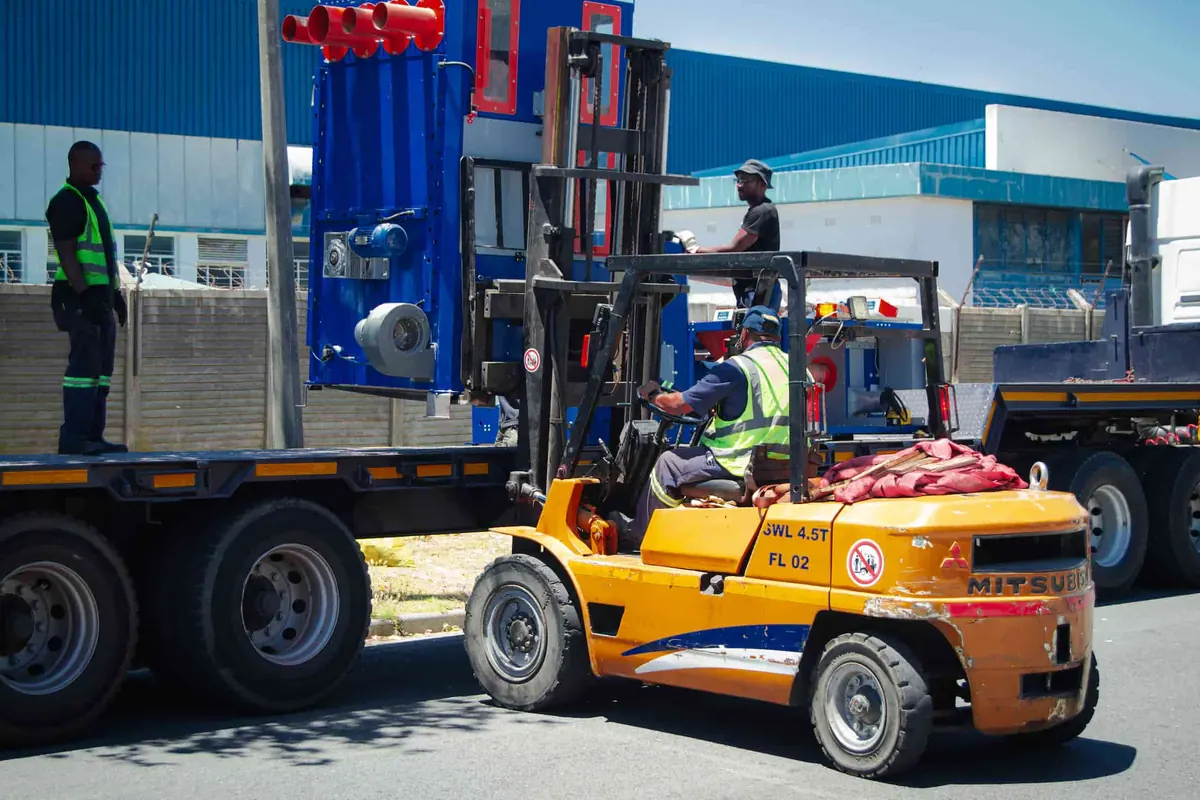
- Lift and skate machines out using the right equipment: cranes, forklifts, gantries, jacks or machine skates, according to the lift plan
- Load, block, brace and lash each machine on the right trailer for its weight and dimensions
- Track every item against the tagged machine list, from loading to arrival
Stage 7: Install, level and recommission
- Position each machine on its marked location and anchor it as specified
- Level and align precision equipment to the manufacturer’s tolerances
- Reconnect services and have the electrical work certified
- Refill fluids, remove transport locks and reinstall any dismantled parts
- Test run and recalibrate with the machine supplier or your maintenance team before production restarts
- Do a final walk-through of both sites, check for damage against the pre-move photos, and close out documentation
Common factory relocation mistakes
- Starting the move before the new site is ready. Machines waiting on uncured floors or missing power lengthen downtime.
- Trusting old paperwork for machine weights. Modifications and add-ons change weights. Verify before booking cranes and transport.
- Too many contractors, no single coordinator. When the crane company, transporter, riggers and electricians all work separately, tasks fall through the gaps.
- Leaving permits until last. Abnormal load and road closure permits can hold up the whole schedule.
- Underestimating recommissioning. Getting machines back to full production often takes longer than the physical move.
One contact for your whole factory move
BrightRig is a turnkey coordinator for factory relocations across South Africa. Our project team plans the move with you, then coordinates everything through our network: the cranes and certified operators, the rigging crews we appoint, the transporters and any abnormal load permits, and the schedule that ties it all together. You deal with one point of contact instead of managing five contractors.
Frequently asked questions
As early as possible. Small moves with a handful of machines can be planned in weeks, but a full factory relocation usually needs several months once you allow for surveying machines, preparing the new site, arranging electrical and air services, booking cranes and transport, and applying for any abnormal load permits. Starting early gives you more control over downtime and cost.
Often, yes. A phased relocation moves production lines or machine groups in stages, so part of the factory keeps running while each stage is moved, installed and recommissioned. Critical machines can be scheduled into weekends or planned shutdowns, and building stock ahead of the move helps cover customer orders.
Under the Occupational Health and Safety Act, the client and every contractor on site have safety duties. Lifting work must be done by competent, certified people under the Driven Machinery Regulations, with a documented lift plan where required, and electrical disconnection and reconnection must be done by a qualified electrician. Ask every contractor for their safety file, certificates and insurance before work starts.
The new site not being ready: floors not cured or level, missing foundations or anchor points, electrical supply not installed, or access too narrow for the machines. Inaccurate machine weights and dimensions are the next biggest cause, because they lead to the wrong crane, trailer or permit.